טשילי: קלענערע פלאנצונגען און רעגן פארלוסטן האלטן קארטאפל פרייזן הויך ביז דעצעמבער
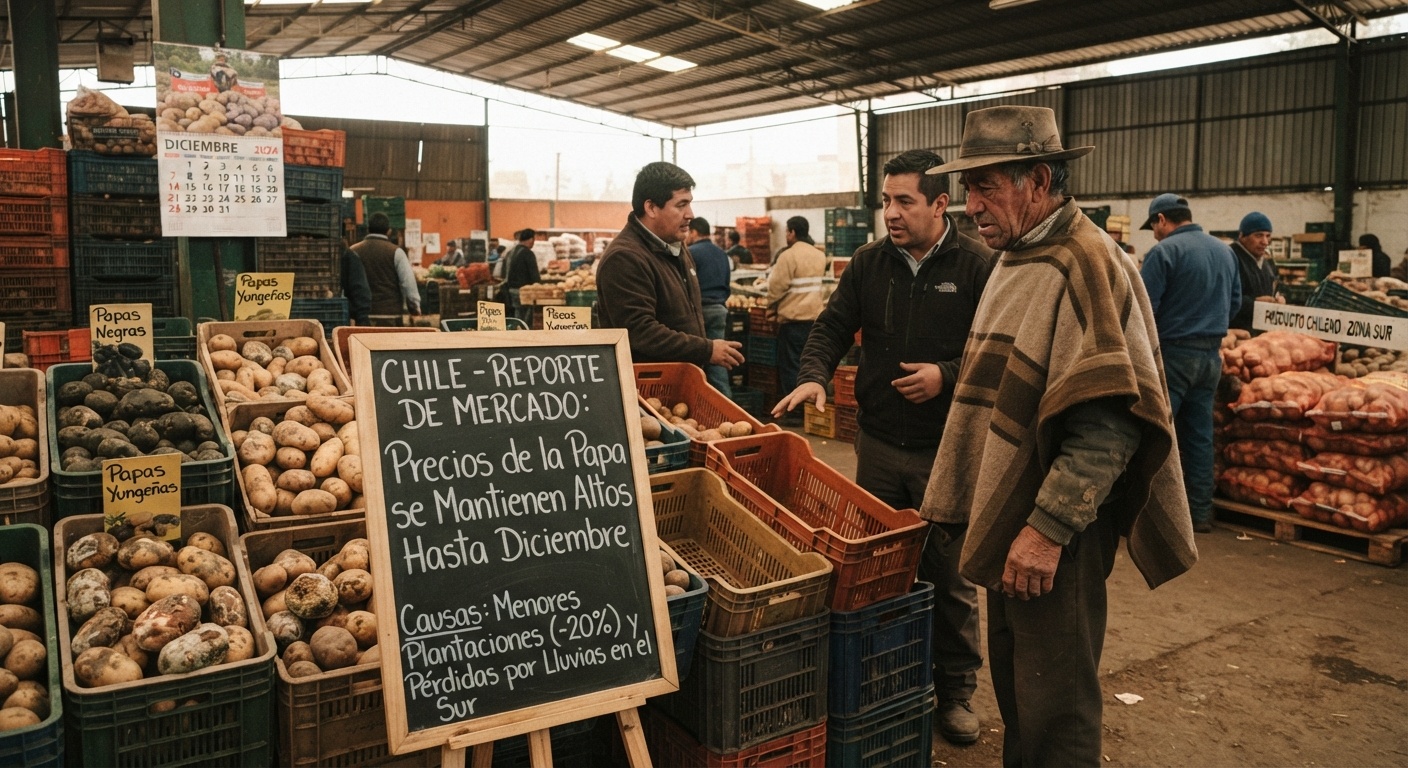
A year after a glut pushed prices to three-year lows, Chile’s fresh potato market has swung to shortage, with relief not expected before mid-December.
Potato prices in Chile are likely to stay elevated until the middle of December, according to Luis Miquel, general manager of Consorcio Papa Chile, the country’s potato industry consortium. Speaking to the regional outlet La Tribuna, Miquel said the price rise reflects a simple shortage of supply: growers planted less, wet weather damaged part of the crop, and early-season potatoes arrived late.
From glut to shortage
Miquel traced the current tightness to the 2023 price spike. High prices that year encouraged growers to expand plantings, and the resulting oversupply pushed prices sharply lower. Losses and a lack of working capital then forced some farms to cut their potato area and others to leave the sector altogether.
וואָכנטעג. אָפּמעלדן זיך מיט איין קליק.
Data from ODEPA, the Chilean agriculture ministry’s office of agrarian studies and policy, shows how violent the swings have been:
- In 2023, the average wholesale price of a 25 kg sack was 17,732 Chilean pesos, 50% higher than a year earlier.
- By November 2025, the wholesale price had fallen to 5,995 pesos, 56% below November 2024.
- In July 2026 it reached 12,429 pesos, up 26% on June and 104% on July 2025.
Retail prices have followed. In July 2026, potatoes in the open-air street markets (ferias libres) of the Santiago Metropolitan Region averaged 831 pesos/kg, up 19% in a month. In August they stood at around 900 pesos/kg, compared with roughly 550 pesos/kg a year earlier.
Rain disrupted harvest and planting
According to Miquel, heavy rainfall made it harder to lift the cuaresmera potato crop and caused tubers to rot. Potatoes left in the ground as a de facto store were also affected, because growers lack adequate storage infrastructure.
The rain also delayed plantings of primor, the early-season potato that normally reaches the market at the beginning of October. This year it did not.
וואָס צו דערוואַרטן
Miquel expects high prices to persist until mid-December, when the delayed early crop should begin to arrive. He cautioned, however, that production costs for the new crop could also be high because of lower yields.
קאָנטעקסט
The episode shows how quickly Chile’s potato market can flip between surplus and scarcity. As recently as January 2026, Miquel was describing a “potato paradox” of overproduction, low prices and rising costs that weighed mainly on small-scale producers. Within months, the sector faces the opposite problem: too little supply, and prices that consumers are feeling.
Sources: Argenpapa, La Tribuna, ODEPA.